
 Shop Vielight tech













Vielight and Brain Resilience: Published Neuroprotection Research | NCAA D1 Football
A University of Utah trial followed 26 NCAA Division I football players through a full 16 week season. Here is what the study measured, what it found, and what it does not yet prove.
On this page
Sources and disclosures
The study discussed here was a peer reviewed, double blind, sham controlled exploratory investigation published in the Journal of Neurotrauma. The reported findings reached statistical significance, and larger multi site trials are needed before clinical efficacy can be established for this application. Vielight technology is not FDA approved for any medical condition.
The problem with “unavoidable”
For decades the conversation around football and brain health has carried a sense of inevitability. The risks of chronic traumatic encephalopathy are well known. So is the fact that the danger is not only in the big hits. It is in the thousands of smaller impacts, called repetitive head acceleration events, that accumulate across a season.
Every defense we have is reactive. Helmets reduce force. Protocols manage what happens after. Neither one touches the cellular cascade that follows an impact.
So a group of researchers asked a different question: what if the brain could be made more resilient before the hit?
The study by the numbers
Lead author Dr. Hannah Lindsey and senior author Dr. Elisabeth Wilde recruited 26 active NCAA Division I collegiate football players for a randomized, double blind, sham controlled trial. The players were split into two groups and followed across a full 16 week season, from preseason through the regular season.
| Participants | 26 active NCAA Division I football players |
| Design | Randomized, double blind, sham controlled |
| Duration | 16 weeks, preseason through regular season |
| Active group (n=13) | Self administered, 20 minutes, 3 days per week |
| Sham group (n=13) | Identical device delivering no therapeutic light |
| Measurement | Advanced diffusion MRI, preseason and postseason |
Every player kept playing. Same practices, same games, same impacts. The only variable was the light.
How the Vielight Neuro delivers itPBM
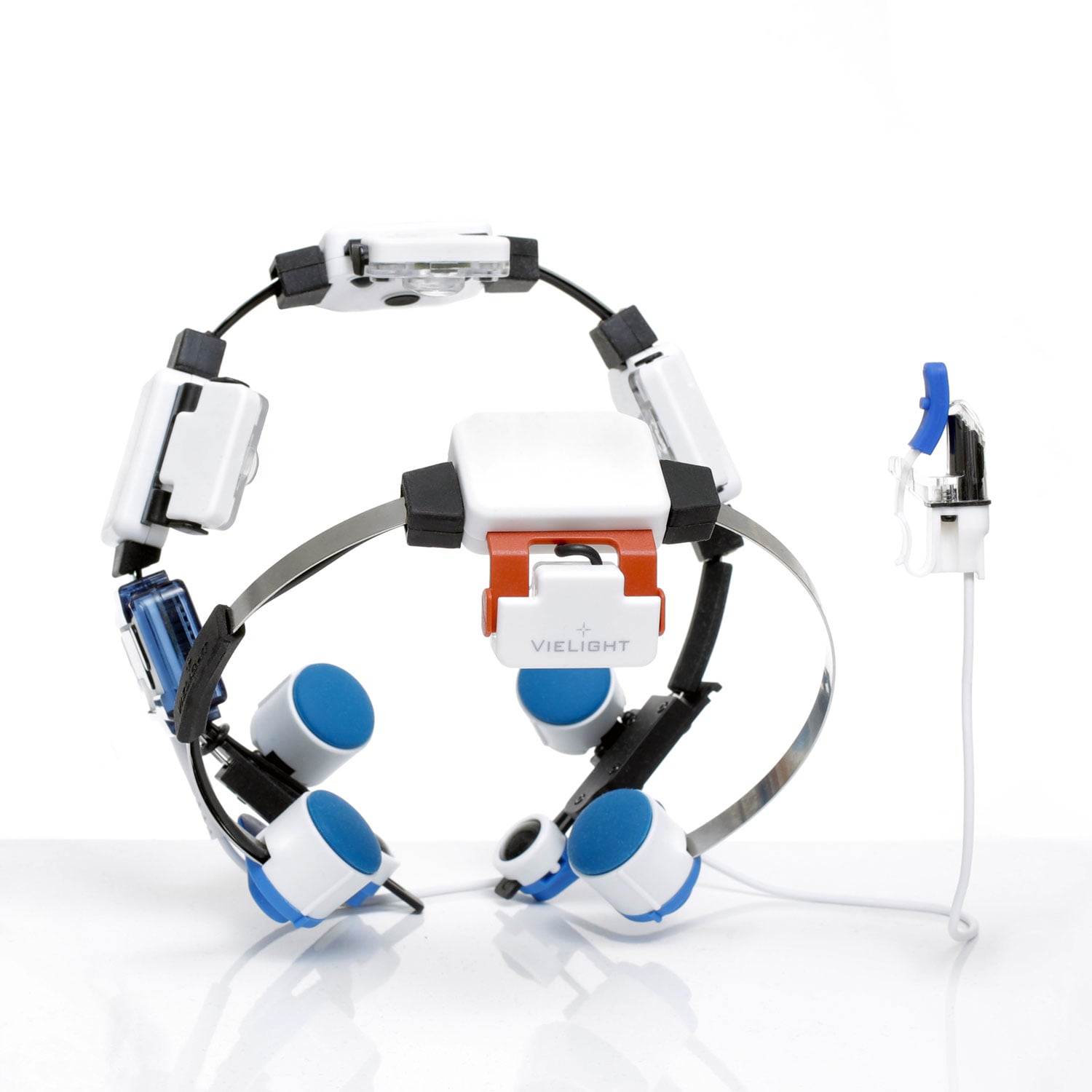
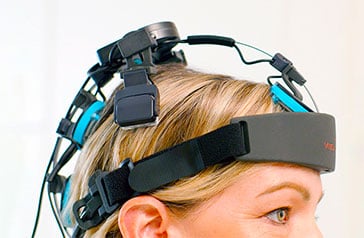
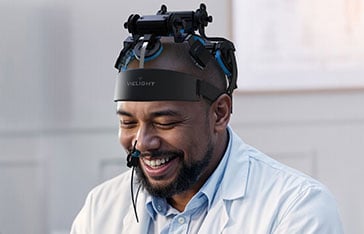
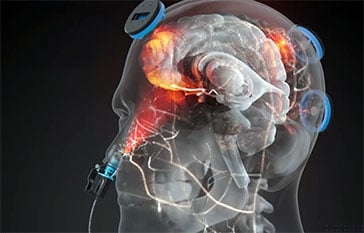
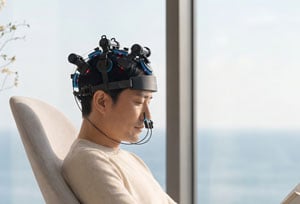
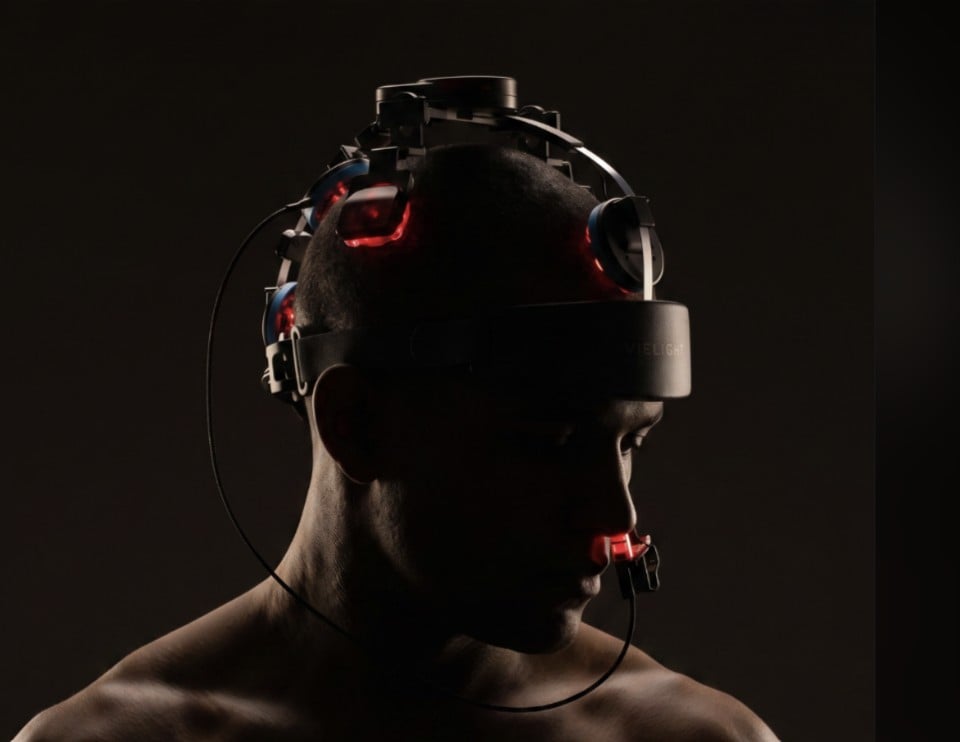
The trial used the Vielight Neuro Gamma 3, which delivers intranasal transcranial photobiomodulation, or itPBM. Transcranial LEDs cover the top of the head. A patented intranasal module works from the underside, where the nasal cavity sits directly beneath the deep brain. Together they cover both surfaces rather than one.
That second channel matters for this study in particular, because the regions the researchers found protected are the ones a transcranial only device has the hardest time reaching. Separate fMRI work at Baycrest has since looked directly at how far the intranasal channel penetrates.
To measure what the light did, the researchers tracked two diffusion MRI markers across the season:
- Restricted diffusion imaging (RDI). A sensitive marker for cellular changes that can align with a neuroinflammatory response.
- Quantitative anisotropy (QA). A marker related to white matter tract integrity and axonal remodeling.
What the MRI showed
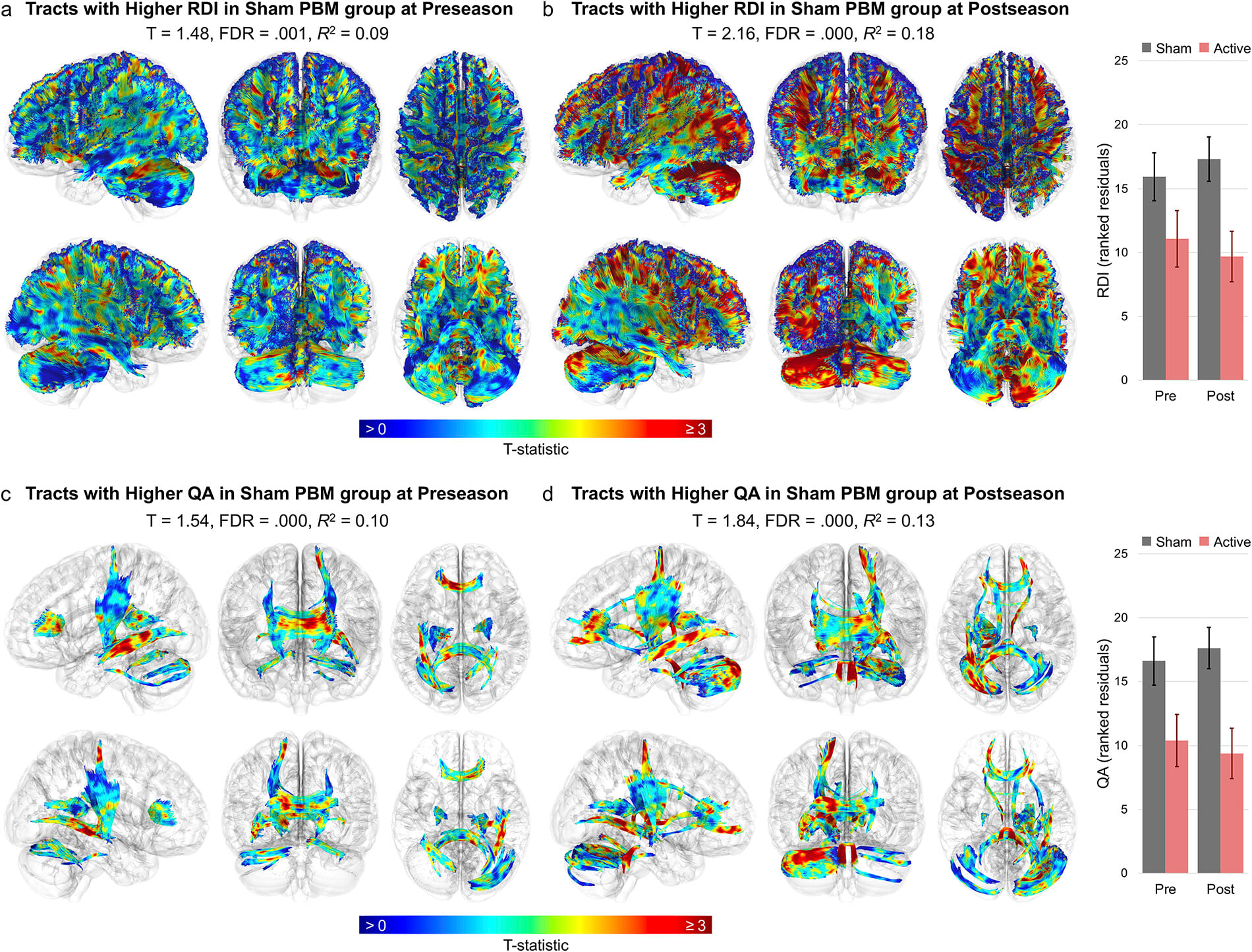
The two groups separated clearly. The sham group’s markers climbed across the season. The active group’s did not.
| Marker | Sham group (no light) | Active itPBM group |
|---|---|---|
| RDI Inflammatory signal |
Significant increase across white matter tracts T=3.15, FDR<0.001, R²=0.50 |
No significant increase. Decreases in selected tracts FDR=0.015 |
| QA Axonal remodeling |
Significant increase T=2.70, FDR<0.001, R²=0.42 |
No significant increase |
| Where | Concentrated in deep midline structures | Those same deep structures were spared |
R²=0.50 in the sham group means roughly half the variance in the inflammatory signal tracked with cumulative head impact exposure over the season.

The cone of vulnerability
The most interesting part of the result was not the size of the effect. It was the location.
In the sham group, the changes clustered in what the researchers describe as the cone of vulnerability, the deep midline regions most exposed to the rotational forces of a tackle:
- Midbrain and brainstem
- Corpus callosum, forceps major and minor
- Thalamus and basal ganglia
In the active itPBM group, those same regions were spared. The authors note this is consistent with light reaching structures that sit well below the scalp, though the study was not designed to isolate the contribution of either delivery channel on its own.
|
Without light Accumulating Inflammatory and remodeling markers climbed through the season, concentrated in the deepest structures. |
With itPBM Holding Same hits, same season. No significant increase in either marker, and decreases in selected tracts. |
What comes next: the $4.6M DoD trial
Researchers at the University of Utah and NYU have received a $4.6 million grant from the U.S. Department of Defense to investigate Vielight photobiomodulation technology in traumatic brain injury.
The 300 participant clinical trial, led by Dr. Elisabeth Wilde and Dr. Carrie Esopenko, will examine cognitive function, mood regulation and overall brain health in service members and first responders with chronic mTBI symptoms. It follows a series of medium sized trials of 40 or more participants using the same intranasal transcranial technology.

Frequently asked questions
What is itPBM, and how is it different from transcranial only PBM?
Intranasal transcranial photobiomodulation combines transcranial delivery across the scalp with intranasal delivery through the nasal cavity. The nasal route sits close to structures on the underside of the brain, including the hypothalamus and ventromedial prefrontal cortex. Transcranial only devices work from the top surface alone.
What did the MRI actually measure?
Two advanced diffusion metrics tracking white matter microstructure across the season. The authors discuss restricted diffusion imaging as a marker that can align with neuroinflammatory cellular processes in this context, and quantitative anisotropy as a metric related to tract integrity and remodeling. Neither is a direct measure of injury.
Why 810 nm and 40 Hz?
810 nm near infrared is a well studied PBM wavelength with favorable tissue penetration and a long record in neurological research. The light was pulsed at 40 Hz rather than delivered continuously, since pulsing changes the dose profile and may influence network level responses differently from steady illumination. These results apply to this exact parameter set and do not establish that other wavelengths or pulse rates would behave the same way.
Does this prove PBM prevents concussion, CTE or long term brain disease?
No. This is an exploratory trial in 26 players. It reports a signal worth validating in larger studies. It does not demonstrate prevention of any disease, and Vielight devices are general wellness products.
Can athletes use this today?
The Vielight Neuro is available as a general wellness device. It is not cleared to diagnose, treat or prevent concussion, CTE or any other medical condition, and anyone with a head injury should be under the care of a qualified clinician.
Source
Lindsey, H. M., et al. (2026). Transcranial Photobiomodulation Promotes Neurological Resilience in Current Collegiate American Football Players Exposed to Repetitive Head Acceleration Events. Journal of Neurotrauma.
Vielight devices are general wellness products. They are not intended to diagnose, treat, cure or prevent any disease, including traumatic brain injury, concussion or chronic traumatic encephalopathy.


