
 Shop Vielight tech











Vielight vs Neuronic: Neuro Gamma 4 vs Neuronic Light Compared (2026)
Vielight Neuro Gamma 4 vs Neuronic LIGHT Overview
These two devices get compared because they cost almost the same ($1,795 for the Neuronic LIGHT and $1,799 for the Vielight Neuro Gamma 4), but they are built on opposite design philosophies.
In a nutshell:
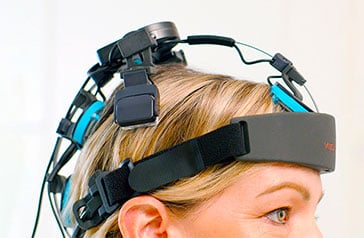
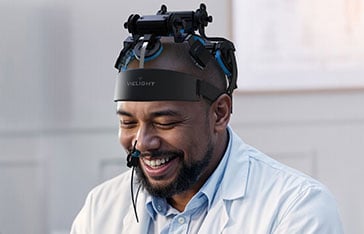
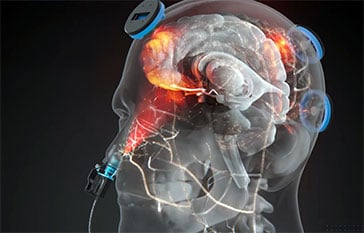
- The Vielight Neuro Gamma 4 covers the brain from the top (transcranial) and the bottom (intranasal) with five hyper-power Vie-LED modules, designed to part hair, with an energy footprint of about 750 cm² through the skull (500 cm² transcranial plus 250 cm² intranasal). One Gamma mode that has been used in 20+ studies. Vie-LED irradiance is independently tested.
- The Neuronic LIGHT covers the head from one direction, the top (transcranial), with significantly more but weaker LEDs inside a rigid shell that cannot part hair. The app lets you choose the pulse rate, intensity and session length from multiple protocols that have not been tested in equally rigorous studies. Neuronic’s LED irradiance claims are not independently tested or verified.


Lab data from the PBM Foundation’s device testing program, measured by Optronic Lab and MegaLab on the Vielight Neuro 3, which shares the Gamma 4’s LED module tech, and on Neuronic’s previous Neuradiant 1070. Vielight supports the program. The reports have not been peer reviewed.
Specifications at a glance
Getting light past the skull
Studies report that more than 95% of near-infrared light is lost crossing the skull alone, before accounting for hair, which can absorb up to 99% of the light before it reaches the scalp. A 2025 study from Ludwig-Maximilians-University Munich, published in Brain Stimulation, measured light from a 256-LED helmet through human skulls and concluded that too little got through to affect brain cells.
The two devices differ in three ways that decide how much light survives the trip and where it arrives, each covered in its own section below:
01 Brain coverage: itPBM vs tPBM
Coverage is not the same as reach
Neuronic lists 670 cm² of coverage for the LIGHT. That is the inside surface of the helmet. It tells you how much scalp sits under LEDs, not how much light crosses it. At an average of about 2.6 mW/cm² across that shell, most of the covered area receives a small fraction of what the 9 high-output LEDs put out.
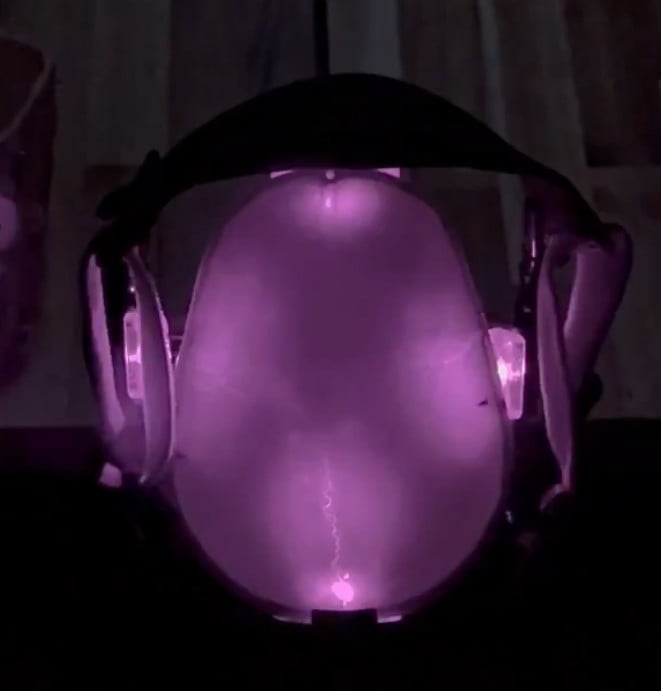
The Neuro’s footprint is measured through a skull instead, with significantly stronger LED modules. Each module produces a cone of light that spreads as it passes through bone, and the cones from the five modules overlap into one continuous field across the top of the brain. In the video below, a Neuro is placed on a real human skull and the near-infrared footprint is captured with a phone camera. The whole upper skull lights up, with the strongest concentration along the midline and toward the back, over the regions of the Default Mode Network and the cerebellum.
Invisible near-infrared energy captured with a smartphone. Energy footprint of the Neuro through a real human skull, no skin or cerebrospinal fluid. The skull scatters light energy naturally.
From the lens to 750 cm²: three ways to measure coverage
Three different areas get called coverage, and they are easy to mix up. One describes the light at the lens, one describes how it spreads through bone, and one describes where it actually lands. Neuronic’s 670 cm² is a fourth kind: the size of the helmet.

Vielight demonstration on real human skulls, with no skin or cerebrospinal fluid, photographed with a smartphone camera that can see near-infrared light. Areas are approximate. The five transcranial fields overlap, so 500 cm² is the upper end of the transcranial footprint.
Area tells you where light lands. Irradiance tells you how much arrives there, which is covered in section 02. Neuronic’s 670 cm² describes the helmet before hair and bone. The Neuro’s 750 cm² describes the light after bone, and it includes the bottom of the brain, which a helmet cannot reach.
Why the Default Mode Network and the cerebellum
Four of the five transcranial modules sit over the frontal, midline and parietal hubs of the Default Mode Network, the set of connected regions most active when you are at rest, recalling memories or thinking about yourself, and one of the first networks to show changes with age. The fifth, at the back of the head, sits over the cerebellum, the region that coordinates movement, balance and timing and that is increasingly linked to cognition as well. The Neuro was designed around those targets rather than around covering the largest possible area of scalp. Full coverage of the top of the brain comes from the light spreading through the skull; the emphasis comes from where the modules sit. Watch transcranial-only light compared with itPBM.
The nose: a shortcut to the deep brain
The Neuro Gamma 4’s second route is a small light in the nostril, directly below the cribriform plate, the thinnest bone in the skull at about 0.1 mm. The cribriform plate is full of tiny openings by design: it is where the smell nerves pass from the nose to the brain. Light placed there has a short, low-absorption path to the bottom of the brain, the deep brain. The LIGHT has no intranasal component, so every bit of light it delivers has to enter from the top.
Two studies from the Rotman Research Institute at Baycrest and the University of Toronto have now measured this pathway in people, using MRI.
Forehead results from the team’s 2025 transcranial fMRI study. Nasal results from Van Lankveld et al. (2026), a preprint that has not yet been peer reviewed, and the CSF row from Motsenyat et al. (2025, Brain Stimulation, n=45). Both studies used research lasers supplied by Vielight, not a retail Gamma 4, and measured immediate responses in healthy young adults. Read the preprint, our fMRI summary or our CSF study summary.
Why the deep brain matters, and why tPBM helmets cannot reach it
The structures at the bottom of the brain are not peripheral. They are the hubs that the top of the brain reports to. The thalamus relays nearly every sensory and motor signal and regulates sleep and alertness. The hippocampus forms new memories and handles spatial navigation. The amygdala processes emotion and the stress response. The hypothalamus is the master regulator of homeostasis: temperature, sleep-wake cycles, appetite and hormones. The olfactory bulb, the first structure light meets past the cribriform plate, processes smell and is wired directly into the memory and emotion circuits. All of them sit centimetres below the skull, and all of them are studied intensively in research on healthy aging and cognition.
Transcranial light does not get there. In the Baycrest team’s forehead fMRI study with Vielight technology, these regions showed no response. In the same team’s intranasal study with Vielight technology, they did. That is the practical meaning of a second entry point: the Neuro Gamma 4 can deliver light to the top of the brain and to the hubs beneath it in one session, and the Neuronic LIGHT, with no intranasal component, can only reach the top. Read why the nose is the route to the deep brain.
fMRI findings from Van Lankveld et al. (2026, bioRxiv preprint, not yet peer reviewed) and Zhong et al. (2025, Brain Stimulation), both at Baycrest and the University of Toronto, using research lasers supplied by Vielight; the studies measured immediate brain responses in healthy adults, not everyday outcomes. Brain tissue figures from Enam et al. (2026, Scientific Reports), measured through sheep brain tissue with one LED from each device; the Vie-LED tested is the module used in the Neuro 4 and Neuro Pro 2, and the depth figures are illustrative of where each structure sits, not measurements through a head. Descriptions of what each structure does are standard neuroanatomy, not claims about the devices.
That deep brain coverage is the practical point for a buyer. The intranasal light in the Gamma 4 runs at 40 mW/cm², under a quarter of the transcranial modules, because the path is so much shorter. A helmet cannot add this pathway with more LEDs or more power; the LIGHT only has one door.
The nasal light seen from inside a real human skull. Light passes through the cribriform plate toward the olfactory bulb, the ventromedial prefrontal cortex and the hypothalamus.
02 Light intensity at the scalp
Why 5 lights can outperform 300
Light intensity (the technical term is irradiance, measured in milliwatts per square centimetre, or mW/cm²) decides how much light is left after the scalp and skull have taken their share. A device that starts at 3 mW/cm² on the scalp has almost nothing left at the brain surface. A device that starts at 280 mW/cm² has a meaningful amount.
A 2024 review of 97 brain photobiomodulation studies found the most common irradiance used in research was 250 mW/cm² (Journal of NeuroEngineering and Rehabilitation, 2024). The Vielight Neuro’s measured output sits in that zone. The LIGHT’s 9 high-output LEDs, on Neuronic’s own figures, sit at about 40% of it; its 291 low-output LEDs sit at under 1%.
Lab measurements
The PBM Foundation runs a program to standardize how photobiomodulation devices are measured. Two photonics labs, Optronic Lab and MegaLab, measured light intensity at the scalp for the Vielight Neuro 3 and two LED helmets, running each device the way its manual instructs.
Measured by Optronic Lab and MegaLab for the PBM Foundation. Vielight supports the program. The reports have not been peer reviewed. The Neuro Gamma 4 uses the same Vie-LED module design as the Neuro 3 tested. Watch the irradiance testing.
Why irradiance numbers vary, and what we measured ourselves
Irradiance figures for the same device can differ several-fold depending on how they were taken, which is why this page separates stated figures, lab figures and our own. Four things move the number most:
With that in mind, we measured both devices ourselves on the same instrument and the same settings. The meter was a Hopoocolor OHSP350IR, a handheld spectrometer designed for LED spectrometry with a 1 cm² aperture and a 760 to 1,100 nm range, so the LIGHT’s 1070 nm peak is fully captured. It is the same class of instrument that independent reviewer Alex Fergus uses, and in our checks it agrees reasonably well with spectroradiometer readings while running lower in absolute terms. Both devices were set to continuous output: the LIGHT at 100% intensity with no pulse, and the Neuro 4 reprogrammed to disable its 40 Hz pulsing, because a pulsed source prevents the spectrometer from reading accurately. Each was measured in contact with the emitter at its strongest point.
Vielight’s own measurement, not a third party’s, published here with the method so it can be repeated. Absolute readings from a handheld meter run lower than lab spectroradiometer figures, which is why the Neuro reads 180 here and 277.5 at Optronic Lab; the useful number is the ratio on one instrument, about 4.5 to 1. The Neuro read in line with its stated figure. The LIGHT read about 59% below its own, the same pattern Optronic Lab and MegaLab found for the Neuradiant. We would welcome Neuronic publishing its own measurement method and the PBM Foundation testing the LIGHT.
The skull test
Near-infrared light is invisible to the eye, so these tests were filmed on cameras with little or no infrared filtering. A Vielight Neuro Pro 2 and a Neuronic Neuradiant 1070 LED helmet set to maximum were each shone through the same real human skull. Watch the full skull test.


Peer-reviewed study: the Neuronic LIGHT measured through a human skull
Lab reports and skull videos show the penetration difference through a real skull and barriers. A 2026 study in Scientific Reports, a Nature Portfolio journal, measured what makes it through the bone, and it tested the Neuronic LIGHT, the Neuradiant 1070 and the Vielight Neuro Pro 2.
The Neuro Pro 2, uses the same Vie-LED module technology as the Neuro 4 family including the Gamma 4, but carries 12 modules instead of 5 and lets the user adjust irradiance. The per-LED results describe the light source the Gamma 4 uses; the whole-head totals describe the larger Pro 2.

Researchers at the University of Illinois Chicago shone each device through pig skin, a real human skull and a gel that mimics the fluid around the brain, and measured the light that came out the other side at 12 sites across four regions of the head. They then repeated the test through 1, 2 and 3 cm of brain tissue using one LED from each device, and ran computer models of two micro-CT-scanned skulls at 23 wavelengths.
- Behind the skull, the Neuro Pro 2 delivered about 4 to 7 times more light than the Neuronic LIGHT over the front and right side of the head. The Pro 2 reached 0.53 mW/cm² frontal and 0.92 mW/cm² right parietal. The LIGHT stayed between 0.14 and 0.19 mW/cm² at every site, and the Neuradiant between 0.10 and 0.15.
- Through brain tissue, one Vie-LED delivered about 5 to 13 times more light than one LIGHT LED. At 1, 2 and 3 cm the Vie-LED measured 3.05, 2.58 and 1.01 mW/cm²; the LIGHT’s LED measured about 0.24, 0.20 and 0.22.
- The skull let through a similar share of each device’s light, so the gap is emitted power, not wavelength. Skin, skull and fluid passed 2.5% of the Pro 2’s light and 2.5% of the LIGHT’s at the frontal site. Starting with far less light, the LIGHT finished with far less.
- The simulations favoured 1070 nm, the real devices did not. In the computer model, 1064 to 1070 nm transmitted best through bone when every wavelength was given an identical source. With the actual devices, the 810 nm Neuro delivered more at every site. The authors conclude that architecture and emitted power, more than wavelength or LED count, decide how much usable light arrives.
Light measured behind a real human skull
Enam et al., Scientific Reports, 2026 (published online October 25, 2026). Study partially funded by Vielight Inc.; the UIC team designed the study and collected and analysed the data. Tests used hairless pig skin, so helmet results are a best case: with hair in the way the helmets would deliver less. Values marked ~ are read from the paper’s figures. Read our full summary of the study or the paper.
03 Contact with the scalp
Why a few millimetres matter: the inverse square law of light
Light from a small source spreads out as it travels, so its intensity falls with the square of the distance: double the distance and you get a quarter of the intensity. For a single small LED this rule holds well, and it is why a helmet figure measured at the LED surface can collapse by the time the light has crossed the protective layer, the air gap and the hair. You can see it with a phone flashlight: pressed against a fingertip the finger glows red, held an inch away the glow almost disappears. The PBM Foundation testing team named this loss as one of the reasons the helmets measured far below their claims. A module whose lens sits on the skin has no gap to lose light across.


04 Published research
Photobiomodulation results depend on the exact parameters a device uses, including wavelength, irradiance, pulse rate and placement, so research on a specific device is the most direct evidence for that device. Vielight devices use 810 nm and the human studies in our index were run at that wavelength or its near neighbours, most at the 10 Hz or 40 Hz pulse modes our devices ship with; the 40 Hz Gamma mode is the one in the Gamma 4. Every published Neuronic study used the earlier Neuradiant 1070, not the LIGHT, and the only LIGHT-specific data Neuronic lists is an unpublished 25-person pilot with no control group. Imaging is the other difference: an fMRI, EEG or diffusion MRI result shows whether the light did anything measurable inside the head, and Vielight’s index has eleven such studies against Neuronic’s single-person recording.
EVANTHEA appears in both companies’ lists and is excluded from both counts above, since no single device’s effect can be isolated from a multi-device, multi-component program. The Vielight count covers studies run with Vielight devices or Vielight-supplied light sources; two Baycrest imaging studies used research lasers and one COVID-19 trial used Vielight intranasal and systemic devices rather than the Neuro.
Why the results differ
The gap is not only in study size. The Vielight studies have reported measurable brain responses across different methods: brainwave changes on EEG after a single session, blood-flow and cerebrospinal fluid changes on fMRI, network connectivity changes, and white-matter measures over a season. Neuronic’s four device studies, all on the earlier Neuradiant 1070, report small-sample findings that their own authors describe as preliminary. Three design differences most likely explain why.
This is an interpretation of the published record, not a finding from a head-to-head trial. Both companies’ devices are general wellness products, and none of the studies cited establish treatment outcomes for any condition.
Is 810 nm or 1070 nm better?
This is an open scientific question. Both wavelengths sit in the near-infrared window where tissue absorbs little light. 810 nm is close to the absorption peak of cytochrome c oxidase, the enzyme in your mitochondria that most researchers believe is the main target of the light. 1070 nm has been argued to scatter less in tissue.
What is not open is where the human evidence sits. The large majority of published brain PBM studies, and the Vielight research index, sit at 810 nm or its near neighbours. Choosing 810 nm means choosing the wavelength with the track record. Choosing 1070 nm at the LIGHT’s output means betting that the wavelength makes up for the low intensity, and there is no published human study that tests that bet. The UIC skull study above makes the point directly: its computer model favoured 1064 to 1070 nm for passing through bone, yet when the real devices were measured the 810 nm Neuro delivered more light at every site, and the authors concluded that architecture and emitted power, not wavelength, decided how much arrived. The same paper notes that cytochrome c oxidase absorption peaks near 810 nm and drops rapidly past 980 nm. Read more in 810 nm vs 1070 nm for brain PBM.
Settings and customization: the LIGHT’s strongest card
The LIGHT leads on protocols: six presets, a custom mode from 1 to 30 minutes, 0 to 100% intensity, 0 to 999 Hz, and a Bluetooth app. The Gamma 4 has one button: 40 Hz, 20 minutes, designed for ease of use. The LIGHT gives you more to experiment with, but with significantly weaker penetration, less light at the wavelength mitochondria absorb best, and no route to the deep brain. If customizability is what you want, the Vielight Neuro Pro 2 leads by a wide margin.
The limit is physics. Protocols are limited by how much near-infrared energy crosses the skull. A 40 Hz program at 3 mW/cm² through hair is still 3 mW/cm² through hair. Customization is valuable once delivery is solved.
The practical rule: buy the Gamma 4 if you want the studied 40 Hz program with no decisions to make. Buy the Neuro Pro 2 if you want to design your own; it offers more control than the LIGHT does, at a higher price. The LIGHT sits between them on features and below both on the thing the features depend on.
Who makes each device?
Neuronic’s product page does not name a manufacturer or a country of manufacture for the LIGHT. Its previous helmet, the Neuradiant 1070, was built on a platform from Suyzeko, a Shenzhen manufacturer whose helmets are sold under several brand names, per the PBM Foundation report. The LIGHT is manufactured by Shenzhen Kaiyan Medical Equipment Co., a contract manufacturer whose other products include LED face masks and hair-growth helmets, categories built for even, gentle coverage rather than high output at a point. Vielight designs and manufactures the Neuro in-house and owns its supply chain; the Vie-LED module, the curved lens, the flexible band and the intranasal light are Vielight designs, which is why the modules can be driven at the intensity they are and why the same architecture appears in our published studies going back to 2017.
Warranty, refunds, power and daily use
The LIGHT wins on refund terms and portable power. The Gamma 4 wins on warranty, independent safety certification and the EEG analysis software that ships with it. Both are easy to live with; the Gamma 4 has fewer decisions.
Verdict: which should you buy?
What to check before buying any brain light therapy device
Which Vielight Neuro is right for you?
This page compares the Neuro Gamma 4 because it is the Vielight model priced closest to the Neuronic LIGHT. The same Vie-LED modules and intranasal light are shared across the Neuro line; what changes is how many modules you get and how much control you have over them. If the comparison above has you leaning toward Vielight, this is how the three current headsets differ.
The Neuro Alpha 4 is the 10 Hz counterpart to the Gamma 4 at the same price and with the same headset. Manual irradiance figures are from the Neuro 4 user guide (NIM-certified spectrometer, pulsing off); independent figures are from the PBM Foundation testing program (Neuro 3, same Vie-LED module design) and the UIC Scientific Reports study (Neuro Pro 2). Neuro Pro 2 frequency, duty cycle, output and module figures are from the device table in that paper. Prices as of November 2026.
Safety standards
Every Vielight device has been tested by TÜV Rheinland, an accredited independent testing body, to IEC 62471, the international standard for light safety for eyes and skin, and EN 62368-1, the electrical safety standard used for laptops and other electronics. The Neuronic LIGHT product page does not name a light-safety standard. Ask before you buy.
Frequently asked questions
Is Vielight better than Neuronic?
On independently measured light intensity, scalp contact, access to the deep brain and published research, the Vielight Neuro Gamma 4 leads. On adjustable settings, app control, refund terms and portable power, the Neuronic LIGHT leads. Both are general wellness products.
How much light does the Neuronic LIGHT deliver?
Neuronic states 97.08 mW/cm² at its 9 high-output LEDs, and 1.53 mW/cm² at its 291 low-output LEDs, a level likely too weak to matter after the skull. Across the stated 670 cm² coverage and 1,725 mW total output, that averages about 2.6 mW/cm². No independent lab measurement of the LIGHT has been published. On a Hopoocolor OHSP350IR handheld LED spectrometer (760 to 1,100 nm), with pulsing off on both devices, the LIGHT read ~40 mW/cm² at its 9 high-output LEDs and the Neuro 4 read ~180 mW/cm². Neuronic’s earlier Neuradiant 1070 measured 6.22 to 12.1 mW/cm² in independent labs against a 20 to 40 mW/cm² claim.
How much light does the Vielight Neuro deliver?
The Neuro 4 user guide lists about 180 mW/cm² at each of the five transcranial modules and 40 mW/cm² for the intranasal light, measured with a NIM-certified spectrometer with pulsing off. Two independent labs in the PBM Foundation testing program measured the Neuro 3 at 182 to 333 mW/cm² (Optronic Lab, average 277.5) and 208.6 to 301.6 mW/cm² (MegaLab).
Does the Neuronic LIGHT have an intranasal component?
No. The LIGHT delivers light only through the scalp. The Vielight Neuro Gamma 4 includes a small nasal light that sits below the cribriform plate, the thinnest bone in the skull. fMRI studies at Baycrest recorded responses in the thalamus, hippocampus, amygdala and hypothalamus from intranasal light.
How much of the head does each device cover?
The Vielight Neuro Gamma 4 covers about 750 cm² through the skull: up to 500 cm² transcranial from its five Vie-LED modules (about 100 cm² each, as the skull scatters each beam) plus about 250 cm² intranasal across the floor of the skull, shown on camera through real human skulls. Neuronic lists 670 cm² for the LIGHT, which is the inside surface of the helmet, measured before hair and bone.
How many studies does each company have?
Neuronic lists 6 completed studies, 4 of which are human studies using its device alone, totalling 27 participants; all were run on the earlier Neuradiant 1070, not the LIGHT. Vielight lists 31 entries, 23 of which are human studies with Vielight devices totalling 806 participants, with EEG, fMRI and diffusion MRI results.
Can the Neuronic LIGHT part hair?
No. It is a hard helmet with LEDs on the inner surface, so the LEDs rest on top of the hair. The Vielight Neuro uses curved modules on a flexible band that push through the hair and sit on the scalp.
Which Vielight device is most customizable?
The Neuro Pro 2, which offers per-module control through the Neuro Pro app, 9 ready protocols and custom protocols. The Neuro Gamma 4 is the fixed 40 Hz device.
Why are Vielight devices more expensive?
Vielight owns its supply chain and manufacturing process rather than offshoring production to Chinese contract manufacturers, which is how we control the quality of every LED we ship. Vie-LED modules contain highly specialized emitter engineered to produce a safe, optimal irradiance without generating heat at the skin, and that costs more to build than the low-output LEDs used in mass-market helmets and masks. The Neuro is also built on ten years of company-specific research, with millions of dollars invested, and is protected by numerous patents, including the intranasal-transcranial (itPBM) patent. At the Gamma 4’s price the two devices on this page cost almost the same; the higher-priced Neuro Duo 4 and Neuro Pro 2 add a second pulse mode, more modules and per-module control.
Why does reaching the deep brain matter?
The thalamus, hippocampus, amygdala, hypothalamus and olfactory bulb sit at the bottom of the brain, centimetres below the skull, and act as the hubs for memory, emotion, sleep, alertness and homeostasis. Transcranial light from a helmet does not reach them: in Baycrest’s forehead fMRI study these regions showed no response, while in the same team’s intranasal study they did. The Vielight Neuro Gamma 4 includes an intranasal light; the Neuronic LIGHT does not.
Has the Neuronic LIGHT’s irradiance been independently tested?
No, but a 2026 peer-reviewed study in Scientific Reports (Enam et al., University of Illinois Chicago) measured the LIGHT through a real human skull. It delivered 0.14 to 0.19 mW/cm² behind the skull at all 12 sites measured, compared with up to 0.92 mW/cm² for the Vielight Neuro Pro 2, which uses the same Vie-LED technology as the Neuro Gamma 4 with adjustable intensity and 12 modules instead of 5.
Are these devices FDA cleared?
No. Both are sold as general wellness products and neither is cleared to diagnose, treat or prevent any condition.
Keep reading: Understanding the Vielight Neuro, 810 nm vs 1070 nm for the brain, why the nose and the Baycrest MRI study.
Sources
- Neuronic. Neuronic LIGHT product page and research page. Accessed November 2026. Product page, Research page
- Vielight Inc. Neuro 4 User Guide (2026). PDF
- PBM Foundation and Optronic Labs. Device testing case study: Vielight Neuro Duo 3, Neuronic Neuradiant 1070, Suyzeko NIR helmet. Unpublished report. PDF
- PBM Foundation, MegaLab and Light Matter Interaction Inc. PBM helmet test report. June 26, 2024. PDF
- Fernandes F, Oliveira S, Monteiro F, et al. Devices used for photobiomodulation of the brain: a comprehensive and systematic review. Journal of NeuroEngineering and Rehabilitation. 2024;21:53. doi:10.1186/s12984-024-01351-8
- Ludwig-Maximilians-University Munich. Insufficient low-level near infrared light penetration challenges the efficacy of transcranial photobiomodulation. Brain Stimulation. 2025. Journal page
- Enam S, Saint-Martin L, Manwar R, Avanaki K. Micro-CT-informed Monte Carlo and experimental dosimetry of transcranial photobiomodulation devices. Scientific Reports. 2026. doi:10.1038/s41598-026-75995-y
- Motsenyat A, Zhong XZ, Van Lankveld H, Chen JX, Mathew A, Chen JJ. Modulating cerebrospinal fluid dynamics using pulsed photobiomodulation. Brain Stimulation. 2025. doi:10.1016/j.brs.2025.102988
- Van Lankveld H, Chen JX, Zhong XZ, Chen JJ. Intranasal photobiomodulation: an energy efficient paradigm for cortical and subcortical stimulation. bioRxiv preprint. 2026. doi:10.64898/2026.03.03.709361
- Vielight Inc. Every published study behind Vielight technology. Research index
- Light Therapy Insiders. Neuronic company review. Review


