
 Shop Vielight tech














Alzheimer’s Clinical Results: itPBM and Brain Connectivity (fMRI)
Important: Vielight devices are general wellness products. They have not been cleared or approved by the U.S. FDA for any medical use and are not intended to diagnose, treat, cure, mitigate, or prevent any disease, including Alzheimer’s disease or other forms of dementia. This article summarizes a published, peer-reviewed study for educational purposes. It does not describe the intended use of any Vielight product.
UCSF Pilot Study: Brain Blood Flow and Cognitive Scores After Home PBM
Eight older adults with dementia. Two groups. Twelve weeks. In this randomized pilot at UCSF and the San Francisco VA, scores for thinking, behavior and brain blood flow moved in opposite directions: they improved in the group that used home photobiomodulation (PBM) sessions and worsened in the group that continued usual care.
Chao, L. L. (2019). Effects of home photobiomodulation treatments on cognitive and behavioral function, cerebral perfusion, and resting-state functional connectivity in patients with dementia: A pilot trial. Photobiomodulation, Photomedicine, and Laser Surgery, 37(3), 133-141. https://doi.org/10.1089/photob.2018.4555
The key findings
- Cognitive scores. Errors on the ADAS-cog fell from 37.5 to 32.3 on average in the PBM group and rose from 32.1 to 39.2 with usual care. The difference between the two paths was statistically significant (p = 0.007), a low p-value for a study of eight people.
- Behavior. Study partners reported fewer and milder behavioral symptoms (NPI-FS) in the PBM group, falling from 35.0 to 13.5, while usual-care scores rose from 10.5 to 20.3 (p = 0.03).
- Brain blood flow. MRI showed perfusion rising in the PBM group (0.89 to 1.22) and falling with usual care (1.20 to 0.91), p < 0.03. The largest change was in the parietal lobe.
- Brain network connectivity. Within the PBM group, connectivity between two hubs of the default mode network (the posterior cingulate and lateral parietal cortex) increased. It decreased with usual care. The direct comparison between groups did not reach significance.
- The crossover group. Three usual-care participants later completed 12 weeks of home sessions. Their ADAS-cog scores trended toward improvement, though not significantly (p = 0.06).
- Tolerability. The author reported no adverse effects associated with the sessions.


Group means with standard error bars, from Chao (2019). Each group had four participants.
Why this study stands out
Randomized, ethics-approved, and imaged.
Blood flow and connectivity were measured by MRI, not only by questionnaires. Review boards at UCSF and the San Francisco VA approved the protocol.
The change showed up where the light was aimed.
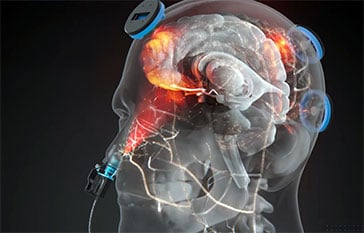
Blood flow rose most in the parietal regions, which sat under three of the device’s four transcranial LED clusters. That match between delivery and measurement is the kind of detail that makes a finding worth following up.
It happened at home.
A spouse or adult child ran each 20-minute session, three times a week. No clinic visits were needed for the sessions themselves.
Independent authorship.
The paper has a single author, who declared no competing financial interests.
It became a template.
The study replicated and extended a 2017 case series, and a sham-controlled trial in Japan has since been designed around the same at-home schedule: three 20-minute sessions a week for 12 weeks (Yokoi et al., 2024).
Study at a glance
| Design | Randomized pilot, home PBM sessions vs. usual care, 12 weeks. No sham group. |
| Participants | 8 adults (mean age 79.8) diagnosed with dementia or Alzheimer’s disease by their own physicians. 4 per group, each with a study partner. |
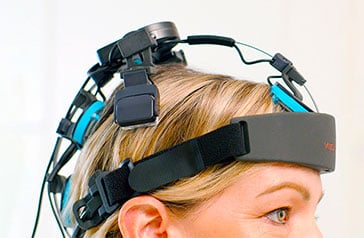
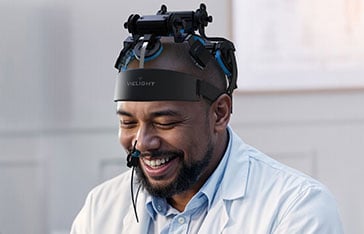
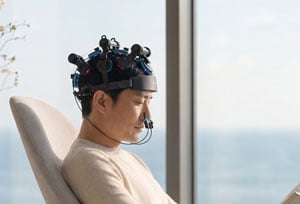
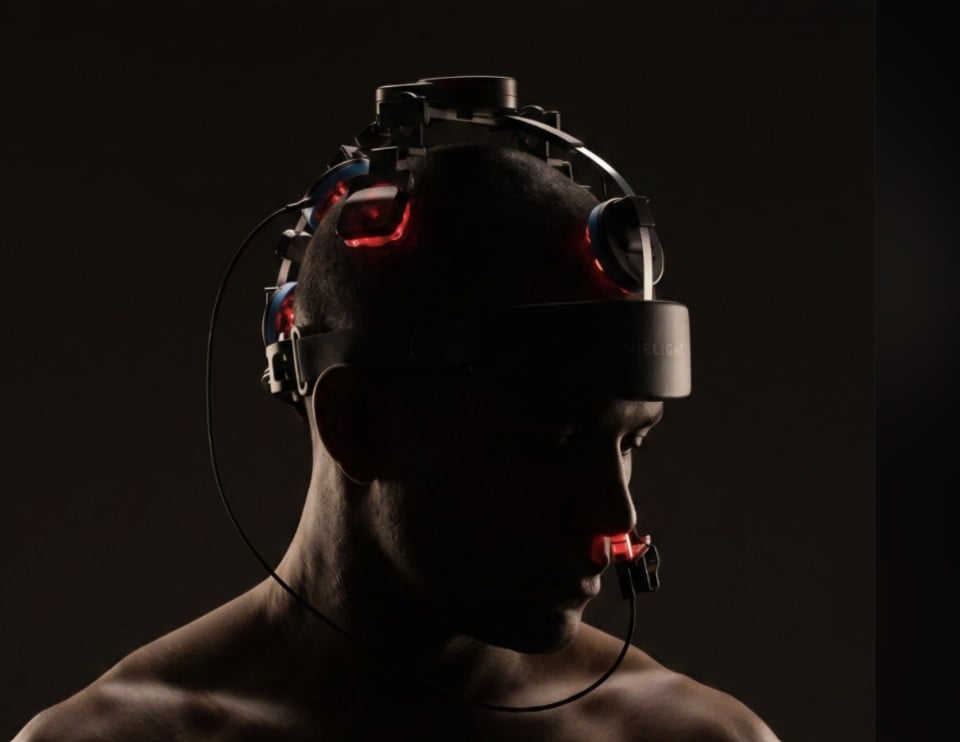
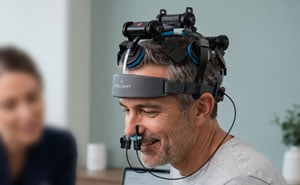
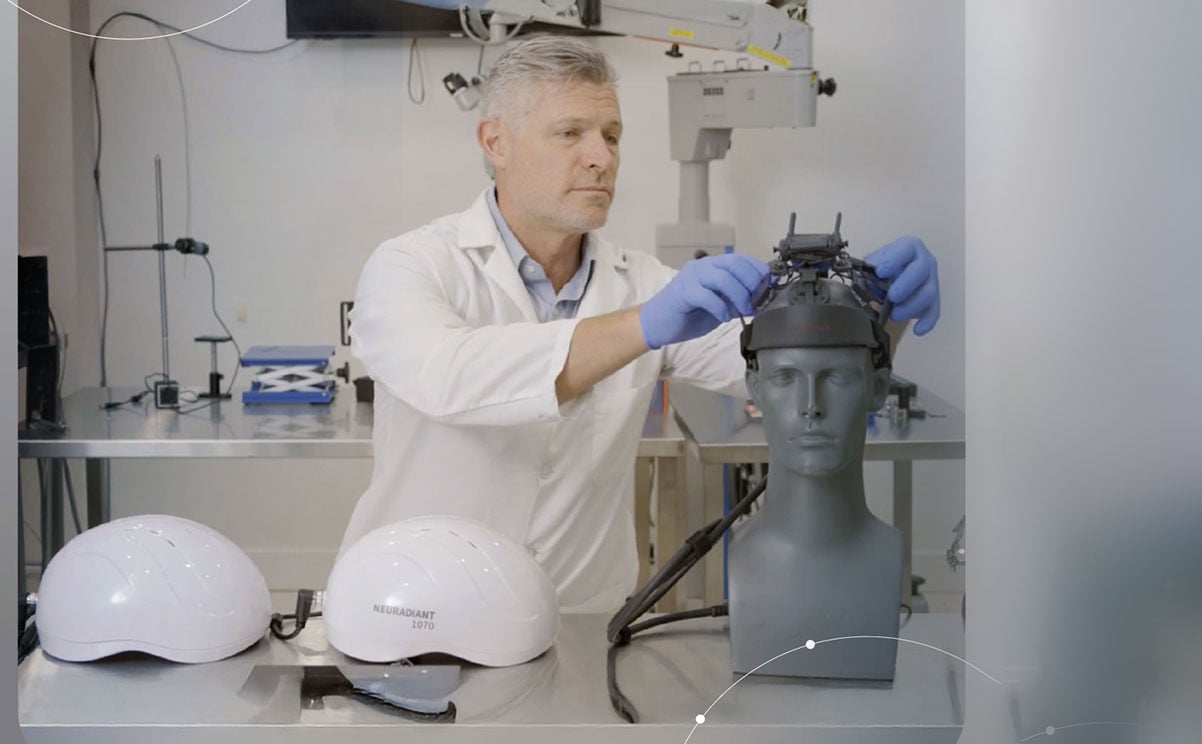
| Device | Vielight Neuro Gamma (transcranial plus intranasal LEDs, 810 nm, pulsed at 40 Hz) |
| Schedule | 20 minutes, 3 times a week, 12 weeks, run at home by the study partner and logged in a diary |
| Medications | Existing medications continued, with no changes or new ones during the study |
| Assessments | Cognitive and behavioral scales at baseline, 6 and 12 weeks. MRI at baseline and 12 weeks. |
| Ethics approval | UCSF and San Francisco VA Medical Center review boards |
What was measured
- ADAS-cog: an 80-point test of memory, language and orientation, scored by errors. Lower is better.
- NPI-FS: a 144-point partner questionnaire covering 12 behavioral areas. Lower is better.
- Cerebral perfusion: blood flow measured by arterial spin-labeled MRI in the superior frontal, superior parietal and supramarginal regions (under the transcranial LEDs), normalized to the primary motor cortex.
- Resting-state connectivity: functional MRI links between the posterior cingulate cortex, a default mode network hub, and other regions.
Full results
Group means, with standard error in parentheses. For ADAS-cog and NPI-FS, lower is better.
| Measure | Group | Baseline | Week 6 | Week 12 |
|---|---|---|---|---|
| ADAS-cog | PBM | 37.5 (5.5) | 35.7 (4.7) | 32.3 (4.8) |
| ADAS-cog | Usual care | 32.1 (0.3) | 34.8 (1.2) | 39.2 (2.6) |
| NPI-FS | PBM | 35.0 (11.6) | 22.8 (4.0) | 13.5 (2.0) |
| NPI-FS | Usual care | 10.5 (1.8) | 14.5 (3.1) | 20.3 (3.5) |
| Total perfusion* | PBM | 0.89 (0.11) | Not measured | 1.22 (0.16) |
| Total perfusion* | Usual care | 1.20 (0.11) | Not measured | 0.91 (0.16) |
*Averaged across the superior frontal, superior parietal and supramarginal regions, normalized to primary motor cortex perfusion.
What to keep in mind
This was a pilot, built to find signals worth testing at scale. The author lists its limits plainly: 8 participants, no sham group, diagnoses not confirmed with standardized research criteria, adherence tracked by home diaries, and no amyloid measures.
One more detail: the PBM group started with higher (worse) scores than the usual-care group, and groups that start further from average can drift back toward it on their own. The author concludes that larger, better-controlled studies are needed. Pilot results describe group averages and do not predict any individual’s outcome.
Background: the earlier case series
This study set out to replicate and extend a 2017 case series by Saltmarche and colleagues, which followed five people with mild to moderately severe dementia over 12 weeks of transcranial plus intranasal PBM. That series used the Vielight Neuro Alpha (810 nm at 10 Hz) and included a Vielight co-author.
Disclosures
The Chao (2019) paper is single-authored and reports no competing financial interests. The device figure in the paper is credited to Vielight, Inc. Participants received $50 for the neuroimaging sessions.
References
Chao, L. L. (2019). Effects of home photobiomodulation treatments on cognitive and behavioral function, cerebral perfusion, and resting-state functional connectivity in patients with dementia: A pilot trial. Photobiomodulation, Photomedicine, and Laser Surgery, 37(3), 133-141. https://doi.org/10.1089/photob.2018.4555
Saltmarche, A. E., Naeser, M. A., Ho, K. F., Hamblin, M. R., & Lim, L. (2017). Significant improvement in cognition in mild to moderately severe dementia cases treated with transcranial plus intranasal photobiomodulation: Case series report. Photomedicine and Laser Surgery, 35(8), 432-441.
Yokoi, Y., Inagawa, T., Yamada, Y., Matsui, M., Tomizawa, A., & Noda, T. (2024). A randomized sham-controlled trial of transcranial and intranasal photobiomodulation in Japanese patients with mild cognitive impairment and mild dementia due to Alzheimer’s disease: a protocol. Frontiers in Neurology. https://doi.org/10.3389/fneur.2024.1371284


