





0

Your cart is currently empty.

Shopping Cart Shop Vielight tech
0

Your cart is currently empty.

Vielight Logo
0

Your cart is currently empty.

Traumatic brain injury

Empowering TBI Research

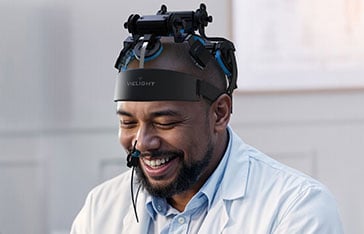
Patented near-infrared technology that supports healthy cognitive aging. From the inventors of brain photobiomodulation.

4.7/5 Rating +100,000 devices sold worldwide

In collaboration with

The science behind our devices

How Vielight is researched for TBI

Groundbreaking independent neuroimaging and cognitive research.

01 · The triggering event
02 · The NIR delivery
03 · The change

01 · The triggering event

Without Vielight

Brain images taken from a published paper studying Vielight in an adult population facing repetitive head impacts. This image belongs to the group without Vielight.

The biology

The Cellular Impact

Published research tracks several cellular shifts in NCAA Div 1 football players:

  • Prolonged metabolic stress.
  • Localized energy deficits.
  • Compromised network communication.

02 · The NIR delivery

THE ROLE OF NEAR-INFRARED LIGHT

Light reaches those same cells

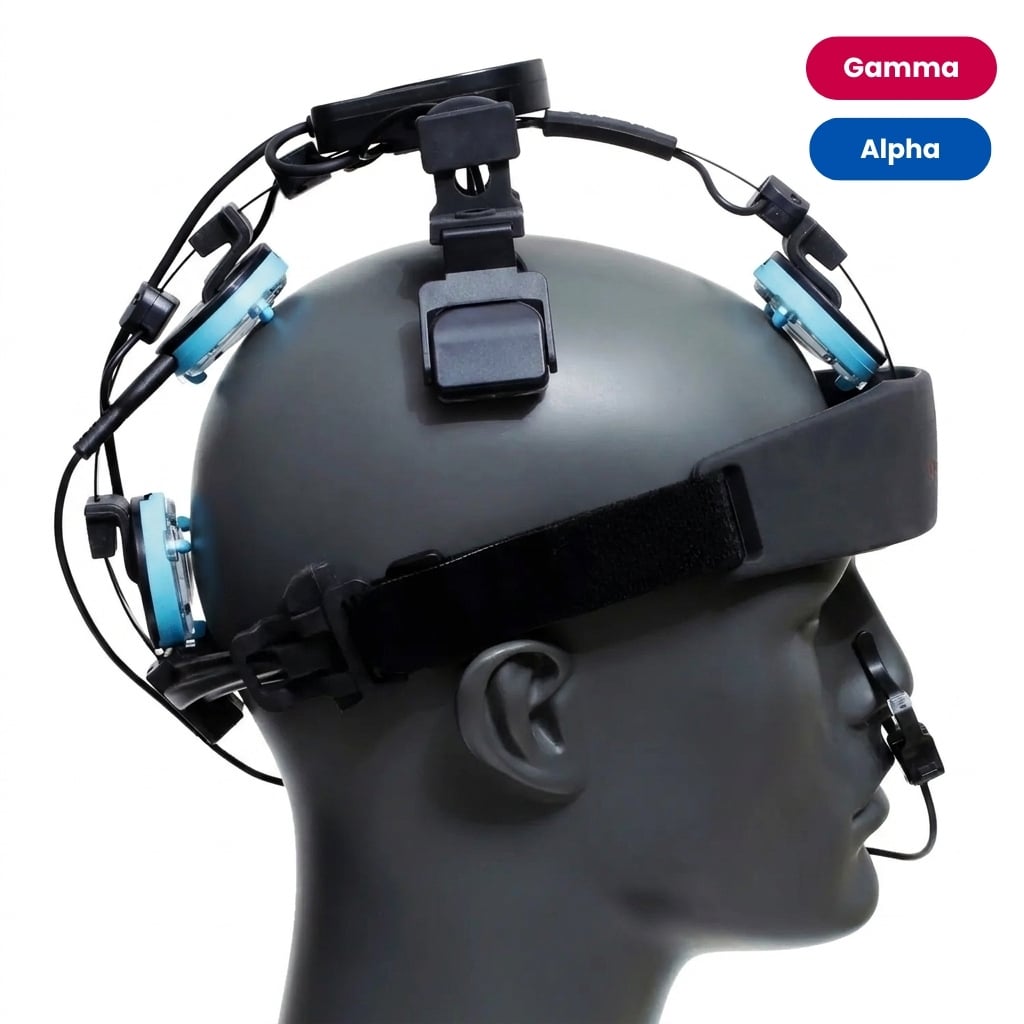
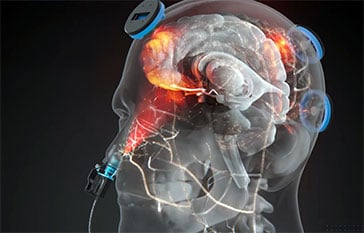
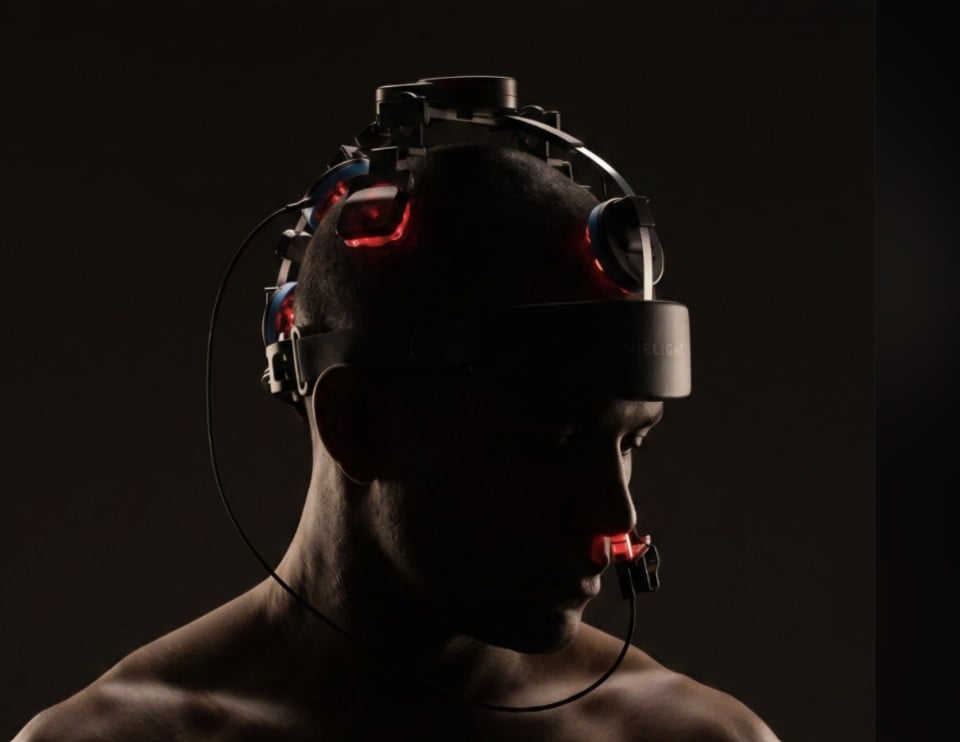
Vielight devices deliver near-infrared light through the skull and nose, reaching deep into the whole brain, unlike other devices on the market that only reach the top. The light is absorbed by the mitochondria, the power plants inside your cells. This non-invasive approach is called photobiomodulation.

Learn more about why Vielight is different

03 · The change

With Vielight

Brain images taken from a published paper studying Vielight in an adult population facing repetitive head impacts. This image belongs to the group with Vielight.

THE cellular RESPONSE

With light, three things change

  • More cellular energy. Mitochondria make more ATP, a molecule that fuels cognitive function.
  • Stronger connectivity. With more energy and more oxygen available, brain regions communicate more efficiently.
  • Brain resilience. Advanced DTI imaging suggests more reslience against impacts.


Vielight devices are general wellness devices and do not diagnose, treat, cure, mitigate, or prevent any diseases.

Backed by science

What the TBI research shows

Peer-reviewed studies, all conducted with Vielight technology.

Built on clinical evidence

Disclaimer: All outcomes outlined above describe published research outcomes using Vielight technology. Individual experiences vary. Vielight devices are general wellness devices and do not diagnose, treat, cure, mitigate, or prevent TBI.

Vielight devices

The Neuro, engineered for your brain

Our most powerful Neuro

The world’s most customizable brain light therapy device. Control all modules in-app, plus 9 preset protocols ready to use.

$5,000 usd
  • Clinical-grade flexibility
  • Deepest near-infrared penetration globally
  • Adjustable frequencies for custom protocols
The complete dual-pathway system

Transcranial and intranasal near-infrared light, engineered together for everyday home use and sustained cognitive support.

$2,399 usd
  • 20 minutes per session
  • Two modes: one for better focus, one for a calmer mind
  • 2-year warranty and 6-month return policy

Neuroimaging research presentation

Dr. Lary Carr shares pilot findings using Diffusion Tensor Imaging (DTI) and functional MRI to track brain changes. This neuroimaging presentation is based on published research with the Vielight Neuro.


Dr. Larry Carr, adjunct professor, University of Utah School of Medicine.

Excellent

4.7/5 rating Based on 517 reviews by home users and professionals

20,000+ people use Vielight technology for mental acuity, wellness and performance

See all reviews in

Frequently asked questions

How soon after a head injury can I use Vielight devices?


There’s no required waiting period. In published research, Vielight devices have been used anywhere from weeks to years after a head impact. The University of Utah studies recruited former athletes long past their playing careers.

Timing is still worth discussing with your healthcare provider, especially if your injury is recent. We don’t recommend our devices if you have active brain bleeds or a history of seizures.

Not sure where you are in the process? Get a free consultation with our experts.

How long does each session last?


The Neuro devices (Pro, Duo, Gamma, Alpha, and the Duo + Vagus combination) are timed for 20 minutes. The MIP is timed for 25 minutes.

You can use your Vielight device between every other day to six days a week, depending on your needs and health. For our Neuro devices, our general recommendations are:

  • Pro, Duo & Duo + Vagus: Once daily, alternate between Alpha and Gamma.
  • Gamma: Once daily, in the morning or early afternoon.
  • Alpha: Once daily, before bed.

If you have any additional questions about usage, you can get a free consultation with our experts.

Are there any contraindications or side effects? 


All Vielight devices have been tested by TÜV Rheinland, an accredited independent testing body, to two internationally recognized safety standards: IEC 62471 for photobiological safety, and EN 62368-1 for general product safety. Together they cover both the light our devices emit and the electronics that produce it.

How is the light itself evaluated?


IEC 62471 is the international benchmark for the safety of light emitting products. It measures a device’s actual optical output against exposure limits for the eyes and skin, established by the International Commission on Non-Ionizing Radiation Protection. Vielight devices have been certified safe.

  • Electrical & Thermal Safety (EN 62368-1:2014): Tested under the international safety standard for electronic, IT, and communication equipment. This certification ensures comprehensive protection against electrical shocks, overcharging, mechanical hazards, and excessive thermal output (overheating).
  • Optical & Photobiological Safety (IEC 62471): Tested for light and optical radiation safety. This standard verifies that our high-powered LED and Near-Infrared (NIR) emissions operate within recognized exposure thresholds, ensuring safe use for skin and eye exposure.

And the device electronics?

EN 62368-1 is the modern safety standard for consumer electronics, the same one applied to laptops, audio equipment, and communications hardware. It takes an engineering-first approach, identifying the energy a product uses and verifying that appropriate safeguards are designed around it.

What does safety testing tell me, and what does it not?

Safety testing confirms that a device is engineered and manufactured to recognized international benchmarks. It is a separate matter from regulatory clearance for a specific medical use. Vielight devices are general wellness products, and are not intended to diagnose, treat, cure, or prevent any disease or medical condition, including traumatic brain injury, concussion, or CTE.

Can I use Vielight devices alongside other treatments?

Yes. Vielight devices can be used on their own or alongside other therapies, with no reported interactions. If you’re already working with a physician, physiotherapist, or neuropsychologist, it’s worth telling them you’ve started, mostly so someone with your full history is tracking your progress alongside you.

What mode is used in Vielight’s TBI research?

40 Hz Gamma, delivered through the combined intranasal and transcranial pathway. It’s the mode used across the published research, and it’s a preset on both the Neuro Duo 4 and the Neuro Pro 2.

Want more info? See the full research library.

How are Vielight devices different from others?

Two things: how much of the brain the light reaches, and how much of it arrives.

Devices that send light in through the top of the head reach only the top half of the brain. Vielight reaches the whole brain, using two routes at once in a patented approach called itPBM (intranasal-transcranial photobiomodulation). Most VIE-LEDs sit on the scalp, and a small light sits just inside the nose, a much shorter path to the deeper areas tied to memory and emotion. No other helmet can take that route.

The second difference is how much light arrives. Independent labs measured Vielight’s scalp modules at more than ten times the near-infrared light you would get standing in the sun. The two helmets tested alongside came in below sunlight, at roughly a quarter and a sixth of it. Vielight’s VIE-LEDs are curved so they part the hair and sit against the scalp, because hair scatters light before it reaches bone.

You can see the penetration tests and the full comparison on our Advantages page.

See all FAQs

The research is in. The next step is yours.

Start with the Neuro Duo 4, the itPBM device trusted by researchers, clinicians, and home users in 100+ countries.

0