 Shop Vielight tech












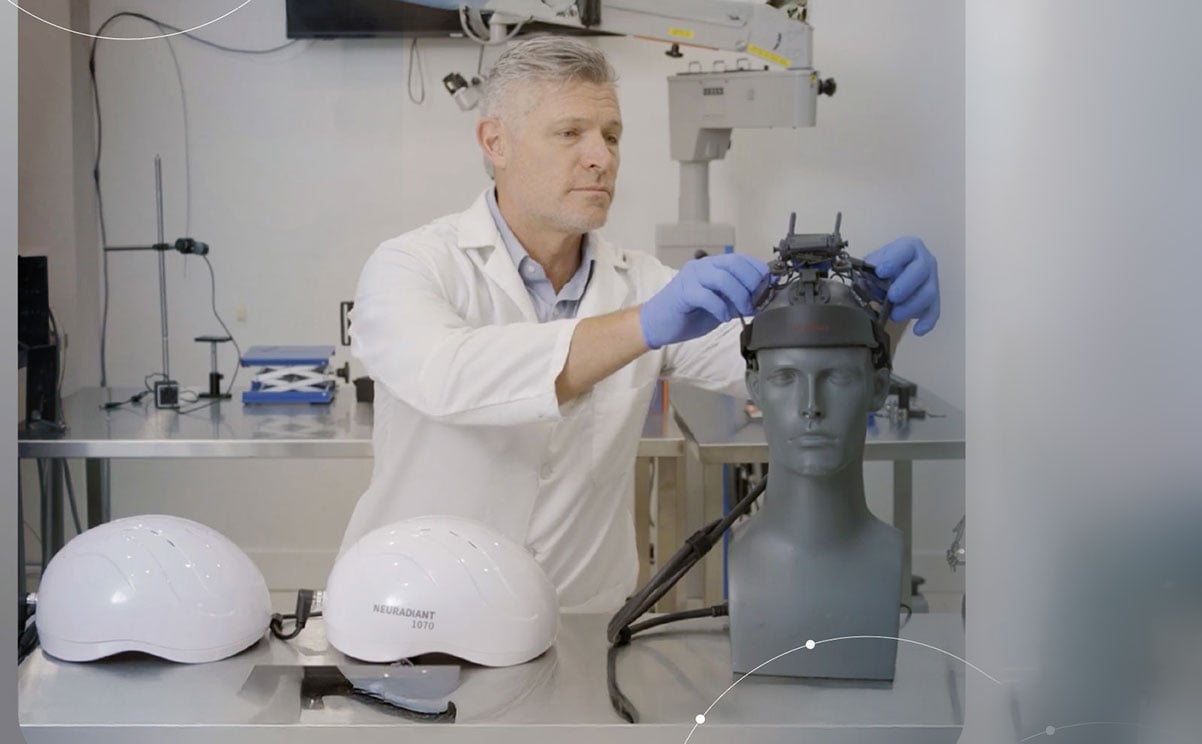

What is Vie-LED® Technology? The Importance of Irradiance
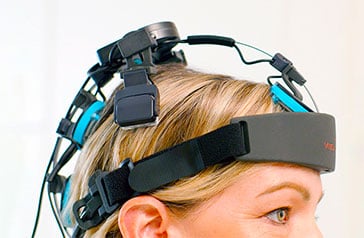
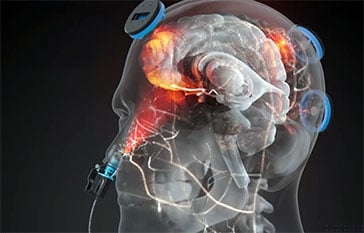
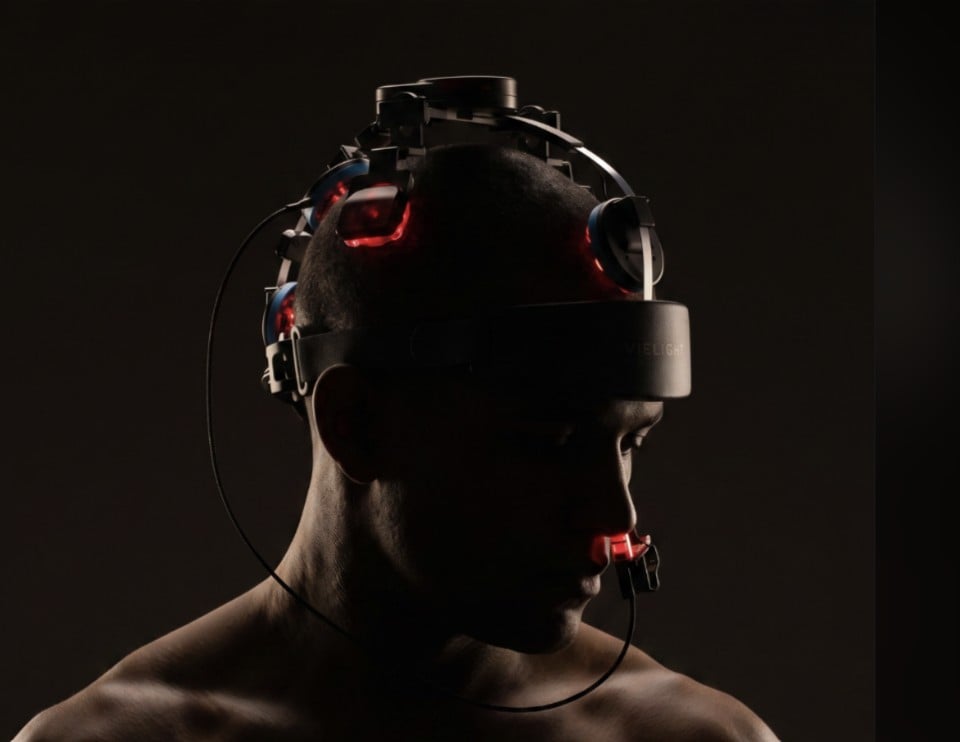
At the heart of Vielight’s innovation lies a proprietary engineering breakthrough: Vie-LED® technology. Designed specifically for transcranial and intranasal photobiomodulation (PBM), Vie-LED is not just another light-emitting diode system. It’s a meticulously optimized delivery mechanism that enables high irradiance output with minimal heat generation, ensuring both therapeutic potency and user safety.
High Irradiance, Minimal Heat – An Engineering Achievement
In photobiomodulation, irradiance (measured in milliwatts per square centimeter, mW/cm²) is one of the most critical parameters for therapeutic efficacy — especially when targeting the brain, where light must pass through multiple layers, including scalp, skull, and cerebrospinal fluid.
While many devices boast numerous LEDs, more does not mean better if the light energy does not penetrate the skull due to weak irradiance. Vie-LED® modules are engineered to emit targeted, high-power light intensities, reaching therapeutic thresholds needed for neurostimulation – typically 200–300 mW/cm², depending on the model.
Crucially, this is achieved without overheating, thanks to proprietary internal design features that include:
-
Efficient heat sinks
-
Precision current regulation
-
Tight spectral control at optimal therapeutic wavelengths (e.g., 810 nm for deep penetration)
This sets Vielight apart in a field where high power often comes at the cost of discomfort or safety risk.
Visual Proof: Near-Infrared Light Penetrating the Skull with Vielight Neuro
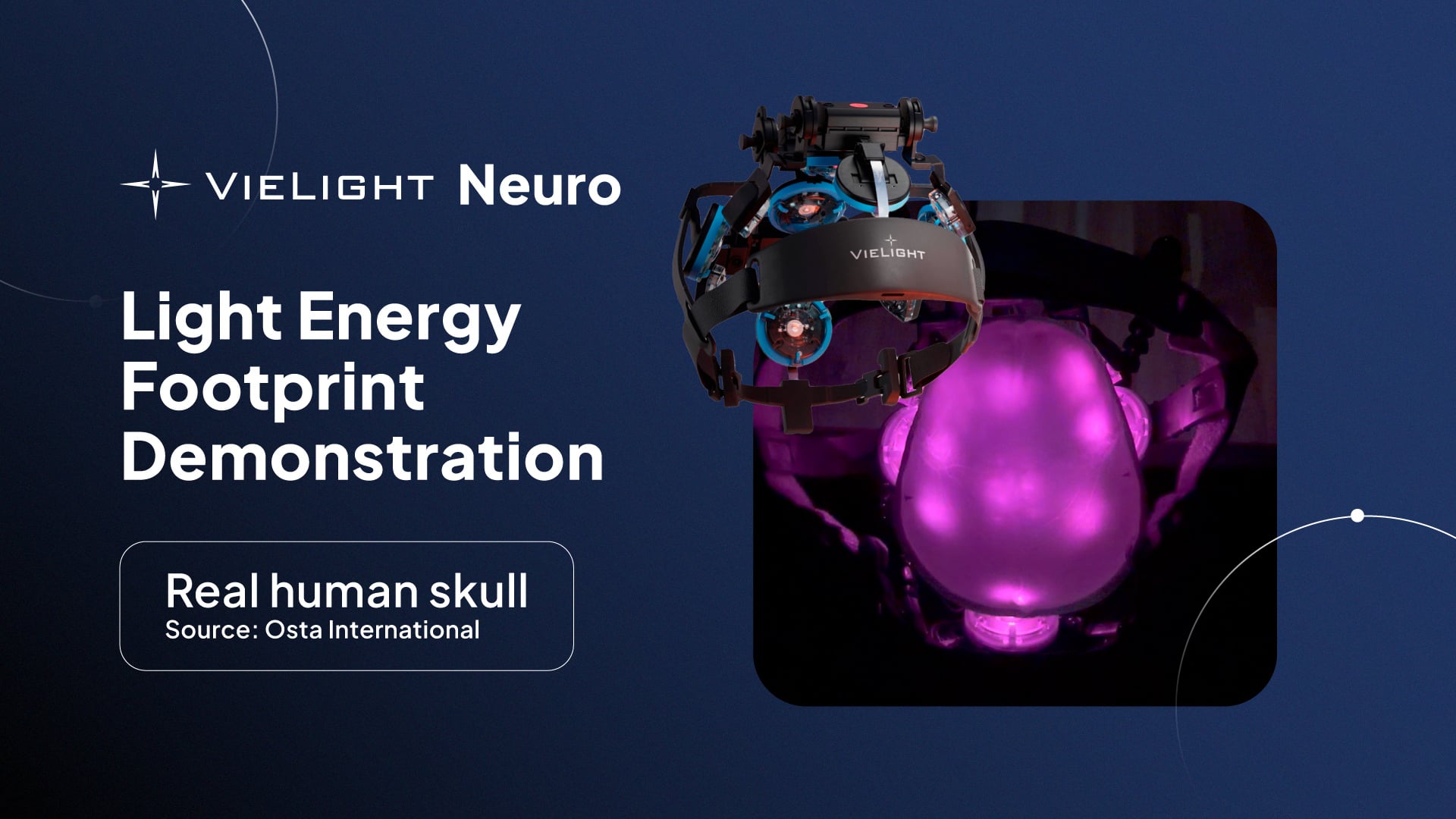
The Vielight Neuro has the deepest penetration in the brain photobiomodulation field. The demonstration video below with a real human skull and the Vielight Neuro clearly demonstrates 810nm light energy with an irradiance of 250 mW/cm2 clearly passing through the skull’s calvaria.
The Vielight Neuro features proprietary Vie-LED technology—highly specialized, custom-engineered LEDs designed to deliver optimal irradiance for brain stimulation without producing excess heat. To ensure safety and efficiency, we’ve intentionally limited the device’s power density to 50% of its maximum potential output. Even still, it features the highest irradiance in the field of brain photobiomodulation according to independent 3rd party tests.
What About Devices With More LEDs?
Helmet brands often highlight a higher number of diodes. However, these typically operate at much lower irradiance levels — sometimes as low as 6–15 mW/cm², according to independent lab tests (e.g., PBM Foundation 2024 irradiance comparison).
MegaLaband Optronic Lab, photonics engineering firms, conducted two mutually exclusive tests with correlative results:
- Read the full independent test report from Optronic Lab here.
- Read the full independent test report from MegaLab here.
- Megalab’s testing methodology.
But why does that matter?
In brain PBM, light attenuation is exponential, only a fraction reaches cortical neurons. Without sufficient irradiance at the surface, the actual dose delivered to the brain tissue is negligible, regardless of how many LEDs are used. Think of it like trying to light up a room using dozens of flashlights with dying batteries, brightness matters more than quantity.
Vie-LEDs vs 1070nm helmet with hundreds of LEDs.
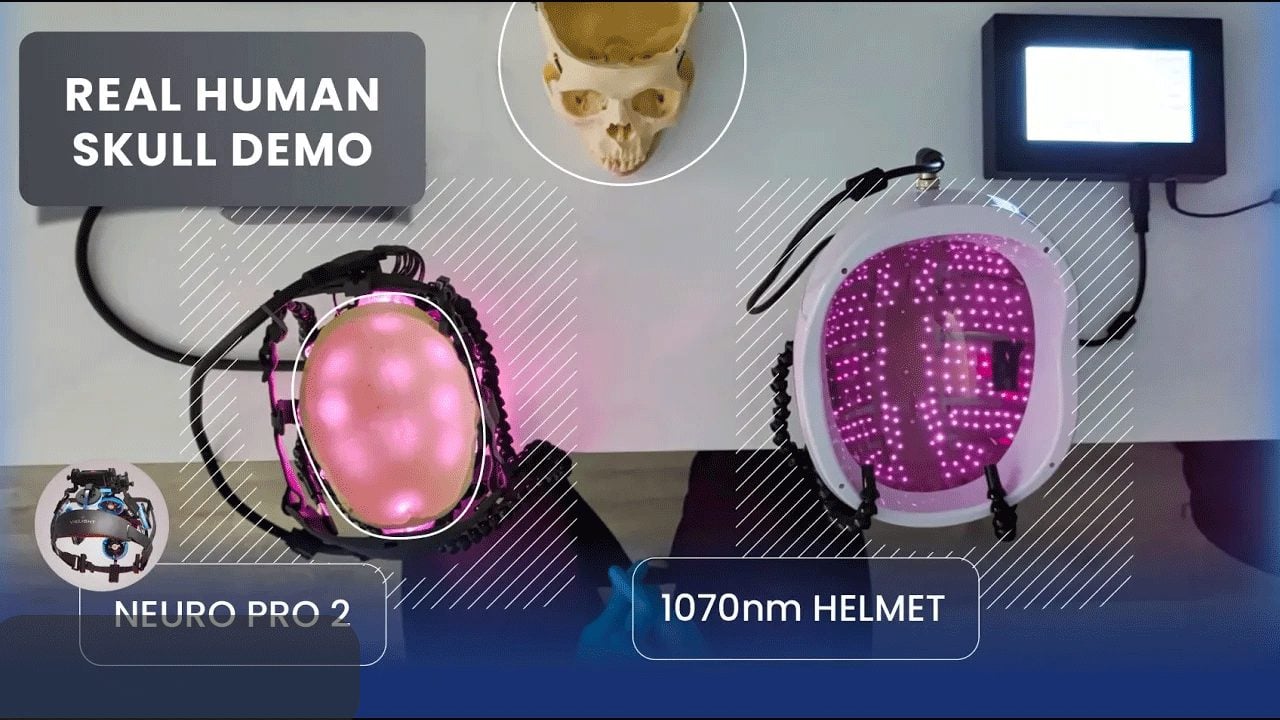
Watch the difference between Vielight’s Vie-LED technology and the Neuronic Neuradiant 1070.
Irradiance comparison table
| Source | Independently measured irradiance | Manufacturer | % of Typical Brain-PBM Irradiance (≈250 mW/cm²) |
|---|---|---|---|
| Vielight Neuro (Vielight) | 180-333 mW/cm2 | Vielight, Canada | 80–160% |
| Neuradiant 1070 (Neuronic) | ≈9 mW/cm2 | Suyzeko, China (Private-labelled) | ≈4% |
| Suyzeko PBM Helmet (Suyzeko) | 5 mW/cm2 | Suyzeko, China | 3% |
| Natural Sunlight | 100 mW/cm2 | Free | 40% |
*Data based on published data by the PBM Foundation in coordination with Optronic Lab and Megalab.
“The Vielight Neuro generated 20-30x more irradiance than the tested PBM helmets, aligning it with the power density levels used in successful clinical research.” — Based on PBM Foundation Standardized Testing.
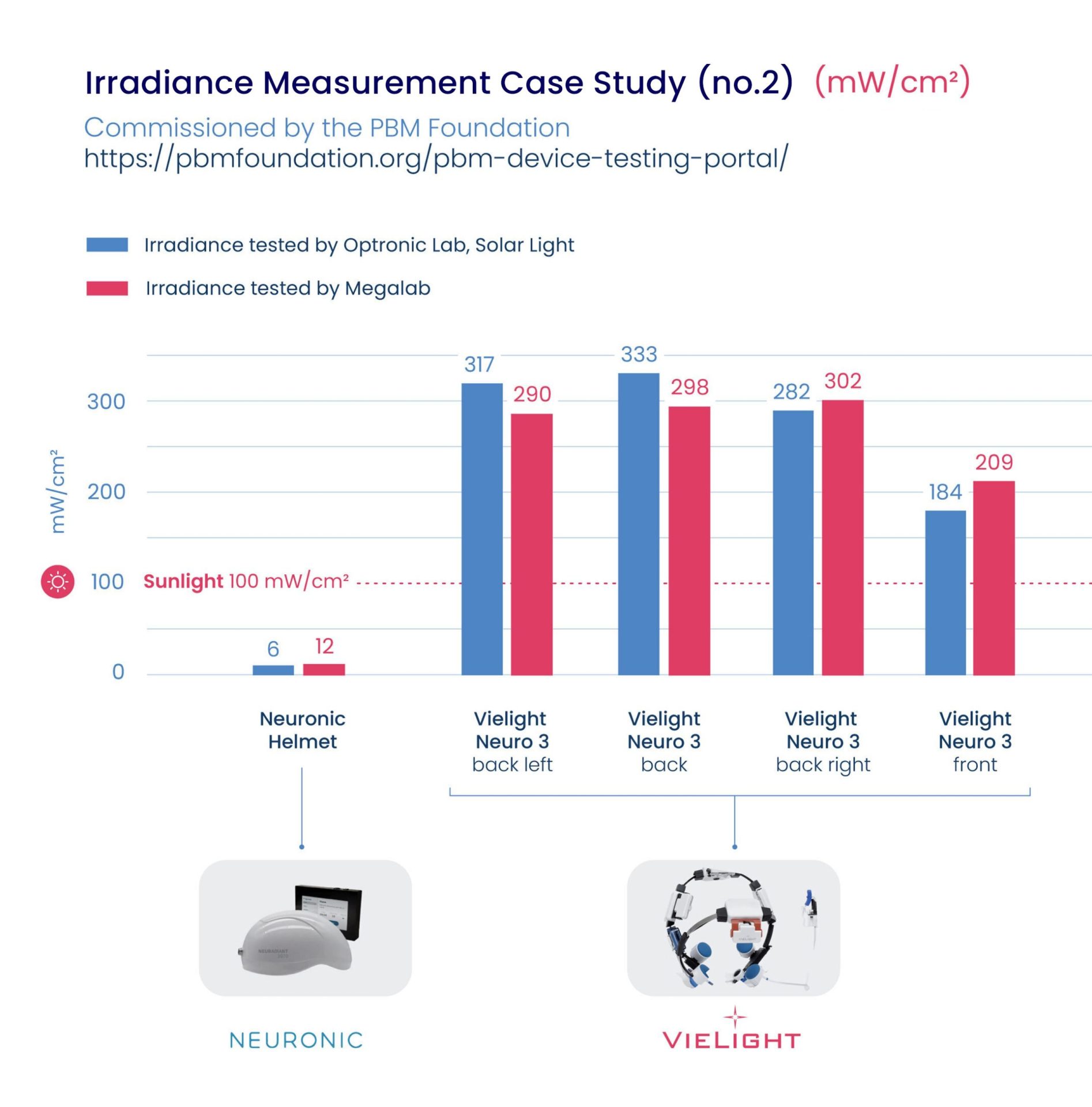
Irradiance differences between the Vielight Neuro and Neuronic Neuradiant
Irradiance is Supported by Science
A 2024 systematic review that screened 2,133 records and included 97 brain PBM studies reports that irradiance (power density) was typically ~250 mW/cm². The Vielight Neuro with an independently measured irradiance of 180-333 mW/cm², is mostly inline with the irradiance used in these studies, which included lasers. However, the Neuronic and Suzyeko helmets generated less than 5% of the average irradiance used over 97 analyzed brain PBM studies.
Clinically Validated — Backed by 30+ Published Clinical Studies
Vie-LED is not just an engineering concept; it’s the engine powering 30+ published clinical studies, including:
-
Double-blind trials on cognitive function and dementia
-
Research into concussion recovery and mental health
-
Studies with military, university, and hospital collaborators globally
This robust body of research reflects the consistency and reliability of the Vie-LED output profile — something essential for replicable results in clinical settings.
Why Vie-LED Matters for You
When selecting a photobiomodulation device, scientific precision, power delivery, and safety should outweigh superficial features like LED count or flashy casing. Vie-LED delivers on what matters most:
✅ Sufficient irradiance for therapeutic effect
✅ Low heat for safety and comfort
✅ Rigorous clinical validation
✅ Designed specifically for the brain and intranasal regions
Whether you’re a clinician, athlete, or health-conscious individual, Vie-LED is a testament to purposeful engineering, not mass manufacturing.
Explore the science. Feel the difference. Trust the technology.
This is Vie-LED®. This is Vielight.


